One change, from a bug report to a release, built with agents
Juice Journal is my desktop app for tracking Path of Exile map runs. On 21 November I shipped a change to it 36 minutes after the bug was reported. Claude Code wrote the code. I decided what got built and what got merged, and I answer for the result. This note walks through that one change with the real artefacts, including the parts that did not go well. Times are Istanbul time.
I use agents for two things: to automate the work that repeats, and to get more out of strong models by dividing the work sensibly. It is close to running a small team of my own: I hand out the work, follow the process and keep the quality of the development up.
13:23, the report
I typed this into the session, in Turkish, the way I would say it to a colleague:
"Örnek kullanıcı mapte öldü ve mape tekrardan giricek portalı var mapte bitmedi yeniden başlatıyor burda bir çözüm üretmeliyiz"
In English: a player dies in a map, the portal is still open, the map is not finished, but going back in starts everything over. We need a fix.
13:25, a scope before any code
The agent read the code and came back with a cause, a proposal and a question. It had written nothing yet. Translated from Turkish and shortened:
Cause: when the character dies and lands in the hideout, the app counts that as "left the map" and ends the run. Coming back through the portal looks like a new map, so a new run starts. The same map shows up as two runs, the start card appears again and the entry cost is taken twice.

Proposed fix: the game writes an identity for every map to its log (area name and seed). It stays the same when you come back through the portal. The app remembers the identity of the last run that ended; if the next map has the same one, it carries that run on.

What I don't know: I have not seen in a live log whether Path of Exile 1 writes the seed the same way.

A mid-sized change: it touches ending a run, reading the inventory and the overlay cards. I would do it with an independent review.

Should I write it, or do we talk first?
I said yes at 13:29. The part I look for in a scope is "what I don't know". An agent that lists nothing there has usually not looked.
13:36, the build and the checks
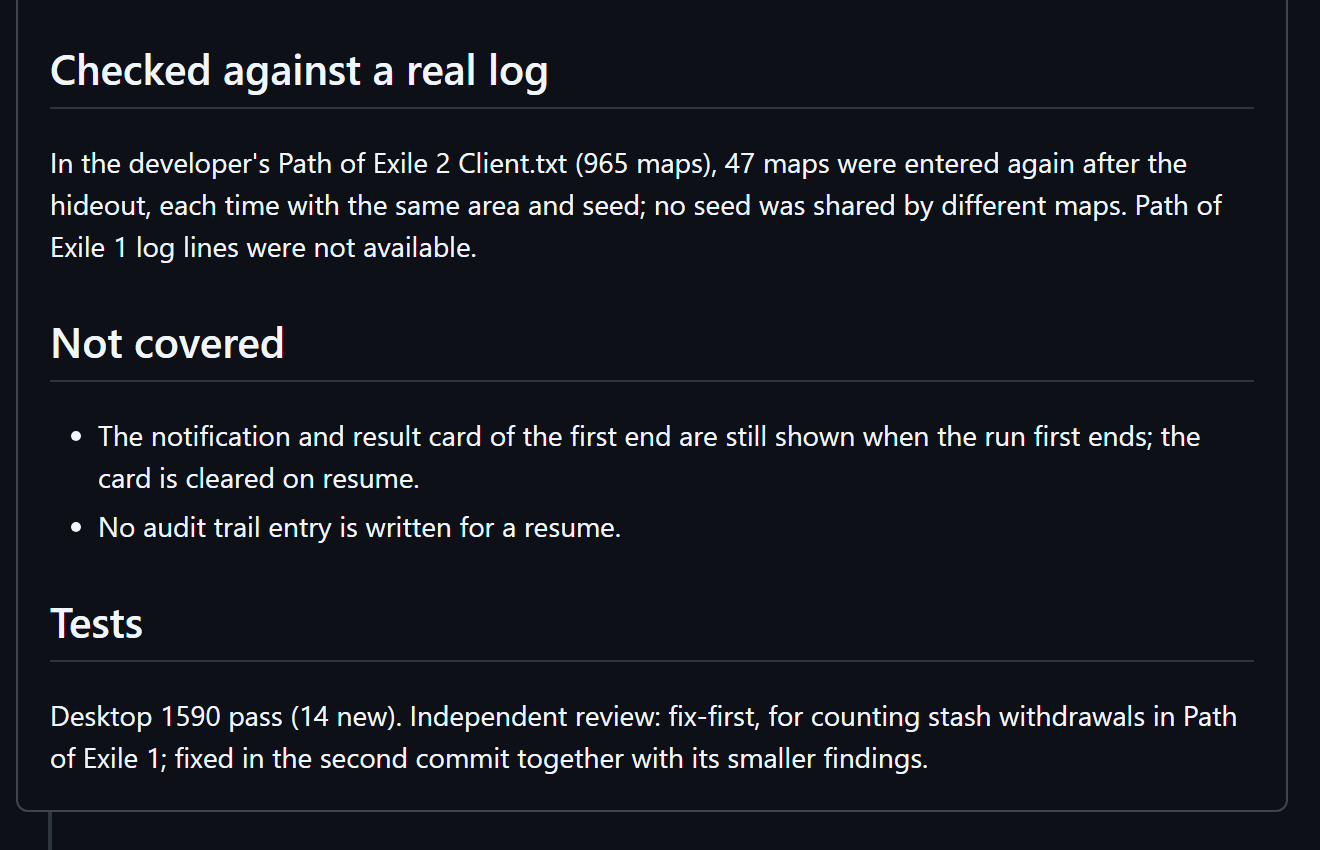
The first commit added 12 tests, and all 1588 desktop tests passed. Tests only prove what they were written to prove, so the agent also checked the idea against my own game log: of 965 maps in it, 47 had been entered again after a trip to the hideout, each time with the same area and seed, and no two different maps shared a seed. That covered Path of Exile 2. I had no Path of Exile 1 log lines, and the pull request says so.
13:42, the review said fix first
For a change this size I use a second agent that has not seen the build conversation and cannot edit anything. It gets a brief: what the change is meant to do, which files changed, where to look hard, and what to send back. The brief ends like this:
Return: verdict ship / fix-first / rethink, then findings ordered by severity, each with file:line and a concrete scenario (inputs/order of events -> wrong result). Under 600 words. Skip pure style nits.Six minutes later it returned one important finding and three minor ones. The important one, as it wrote it:
1. A PoE 1 player has the API read on, dies, and respawns in the hideout.
2. GGG fails or passes the 8 s deadline, so the map is dropped and the "noBaseline" card shows.
3. The player takes 20 Chaos out of the stash and goes back through the portal.
4. The run resumes against the read from the first entry. At the real end, `diffInventory` counts those 20 Chaos as loot.

Verdict: fix-first. Resuming PoE 1 runs after a dropped settle can count stash withdrawals as loot. The other findings are narrow under-counts or gaps that already existed.
Juice Journal has one rule above the others: loot is counted or left uncounted, never guessed. The first version broke it while every test was green. The reviewer also said what it could not do: it had no shell, so it read the changed files instead of the diff.
13:44, the fix and the pull request
A second commit made the app read the inventory again when a Path of Exile 1 map is resumed, and dealt with the smaller findings. 1590 tests passed and the four checks on GitHub were green. I did not send the fix back for a second review.
13:47 to 13:59, merge and release
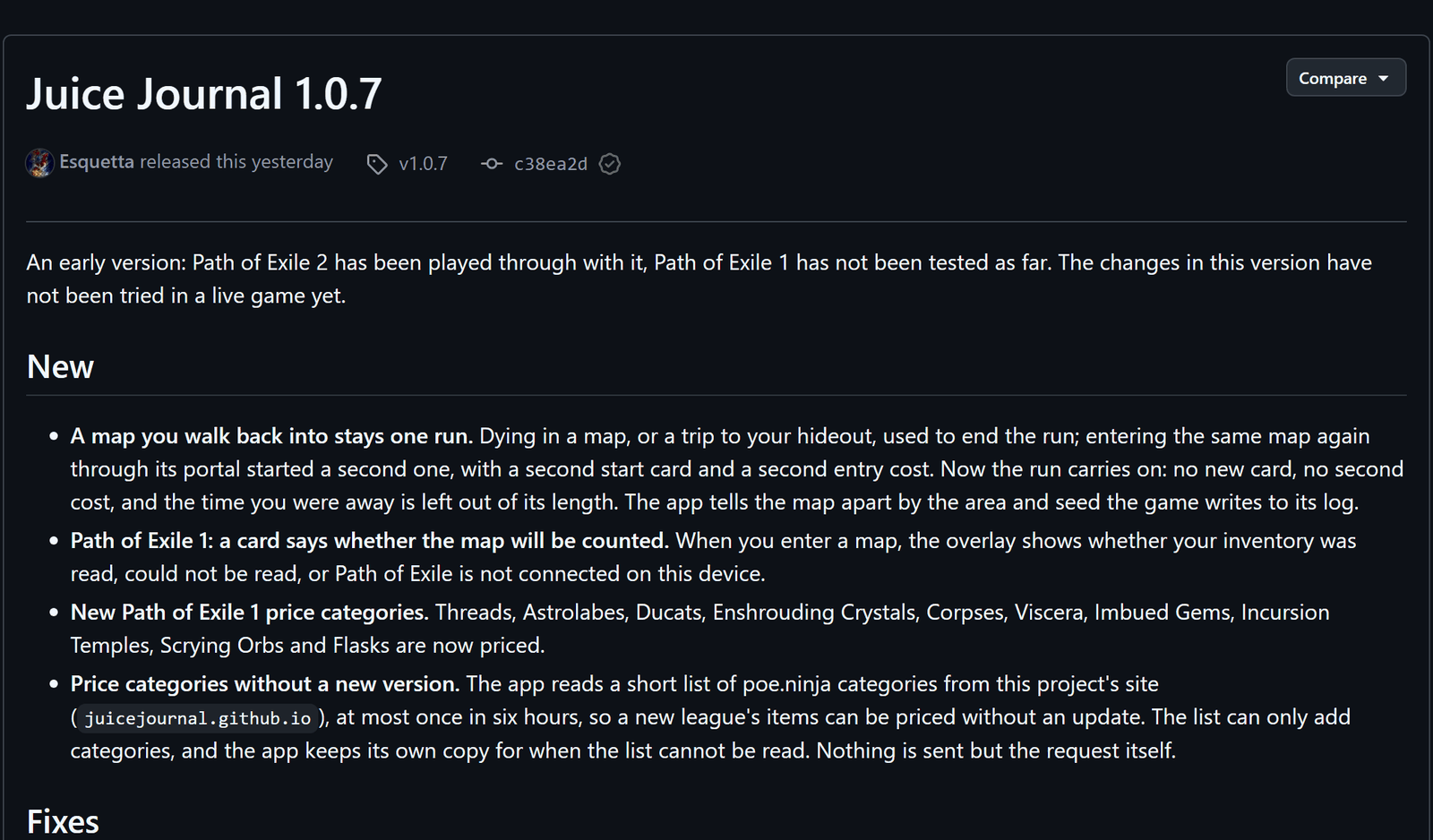
I merged it and released version 1.0.7. The release notes open with the limit that matters most: the changes had not been tried in a live game yet.

What the process missed
The repository also has Codex reviewing every pull request. It left two findings on the first commit, and three more on the second commit at 13:51, four minutes after I had merged. I have not worked through those three yet. They are on the pull request for anyone to read.
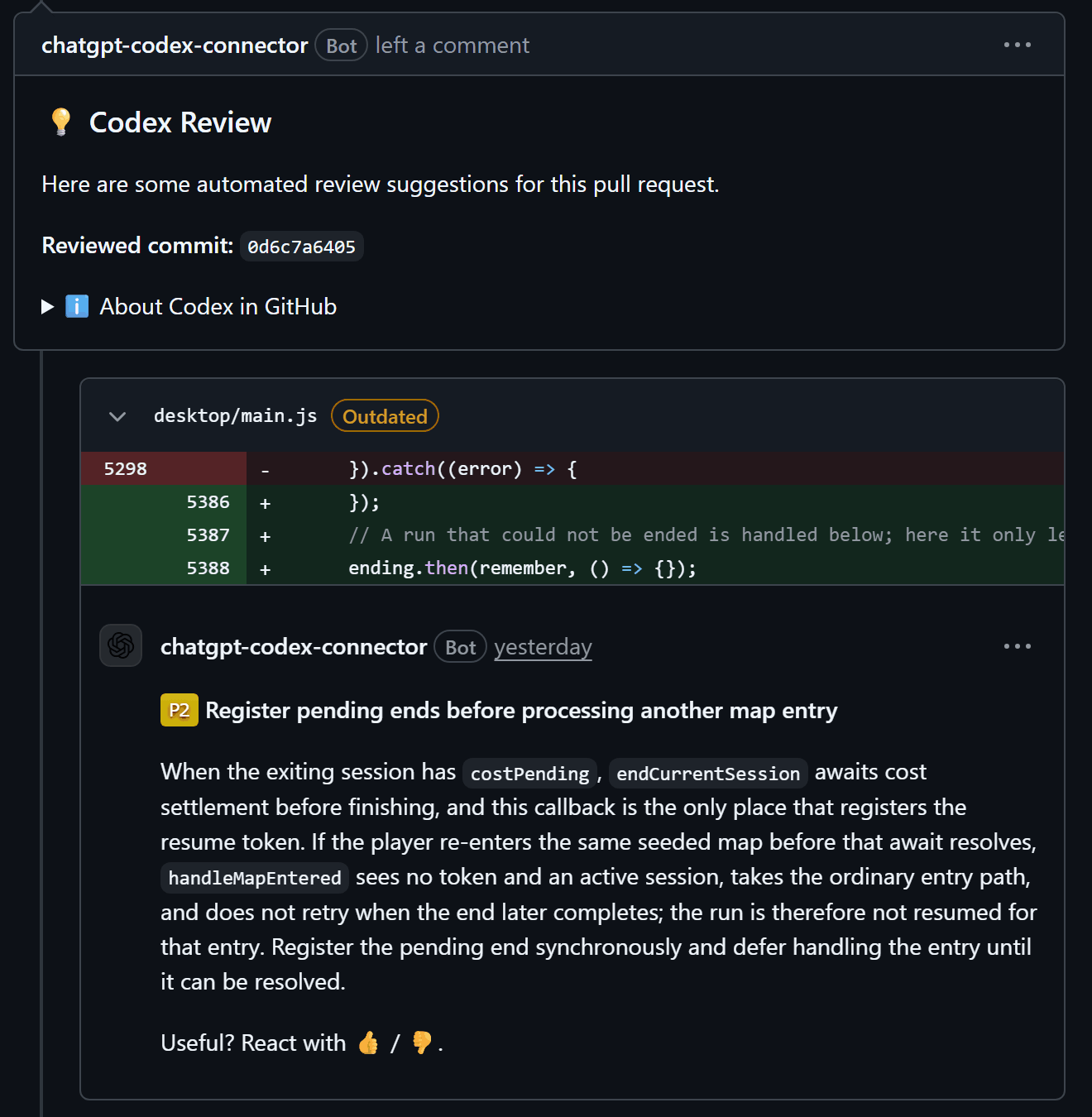
So the plain account of this change is: reported, scoped, built, reviewed, fixed and released in 36 minutes, with one real bug caught before release, no live game test, and three review comments still open.
When a worker gets the task
On this change the main session wrote the code itself. Later the same day a larger one, combined farm types, went to a worker agent with a written task. Two parts of it show the idea:
Do NOT commit, push, kill processes, start the app, or touch anything outside this worktree.

Status line first (DONE / DONE_WITH_CONCERNS / NEEDS_CONTEXT / BLOCKED), then: files changed with one line each, the final `npm test` counts, every place you decided something the packet did not specify [...]
That worker came back with DONE_WITH_CONCERNS: 1602 passing tests, and a note that nothing had been checked in the running app because the task told it not to start it.
What I keep from this
The agents did the typing and most of the reading. What stayed with me was saying yes to the scope, choosing to merge without a second review, and putting my name on a release with a "not tested" line in it. The workflow is public, and so is everything shown here.